
Why does my drain keep clogging after cleaning
If your drain keeps clogging after cleaning in Escondido, the clog was never the real problem. Here is how to find the cause behind the repeat blockage.
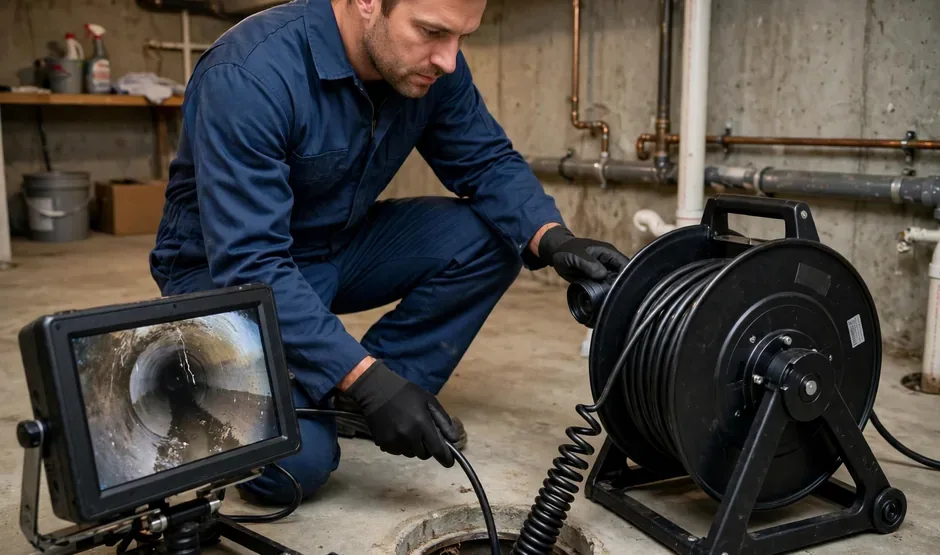
A drain that clogs, clears, and clogs again is telling you the clearing removed the symptom, not the cause. Repeat blockages have a short list of causes, and each one needs a different fix. This post works through that list, in the order a plumber would check it.
Roots that were cut, not removed
Roots enter through joints in older clay and cast-iron laterals and grow into the line. Cutting them clears the blockage, but the entry point remains, and the line remains vulnerable. A camera check after cutting shows whether the joints are cracked, whether the line is damaged, and whether the fix is a maintenance plan, a spot repair, or a lining or replacement conversation. No regrowth interval is quoted here, because regrowth depends on the tree, the joint, and the line, and a single interval would mislead. In Westside Escondido, where older tracts and mature landscaping meet, roots are a first suspect for repeat main-line clogs.
Damage the clearing could not fix
A cracked, bellied, or flattened section collects debris at the same spot every time. Clearing removes the debris, and the dip or crack collects the next load. A bellied section holds standing water and sediment. A collapsed section will not stay clear at all. Only a camera check distinguishes build-up from damage, and only that distinction decides whether the next step is cleaning, spot repair, or replacement. Sewer line cleaning in Escondido covers the clearing and camera step together, because the two belong together on a repeat problem.
Scale and grease that narrow the line
Scale in older pipe and grease in kitchen lines narrow the bore gradually, so the line clogs more easily and more often. Snaking punches a hole through the build-up without restoring the bore, which is why the clog returns on a shortening cycle. Jetting suits grease, sludge, and heavy scale better than snaking, because it cleans the wall rather than piercing the blockage. If the bore is heavily scaled, the question becomes whether cleaning restores enough capacity or whether the section needs replacement.
A shared or upstream source
In multi-unit and mixed-use buildings, a repeat clog in one unit can start in a shared stack or lateral, or upstream of the unit that complains. Clearing the complaining unit alone will not hold. The pattern to note is whether neighbouring units are affected, whether the problem follows heavy use elsewhere in the building, and whether the lowest fixture is the one that backs up. Tracing the shared line, with the building owner coordinating, is the step that finds the source. Drain cleaning in Escondido covers the local end, and shared-line tracing is the step beyond it.
What to do about a repeat clog
Note the pattern: how soon it returns, which fixtures are affected, and whether it follows rain, heavy use, or nothing at all. Stop using chemical cleaners on a repeat problem, since they do not remove roots or repair damage. Ask for a camera check after the next clearing, and ask what the camera found: build-up, roots, or damage. That answer, not another clearing, is what ends the cycle.
Frequently Asked Questions
Why does my drain clog again after snaking?
Snaking often punches through a blockage without removing its cause: roots at a joint, a damaged section, or heavy scale on the wall. The cause collects the next blockage at the same spot.
Do roots grow back after cutting?
The entry point remains after cutting, so the line stays vulnerable. A camera check shows the joint and line condition, and that decides whether the fix is maintenance, spot repair, or a larger repair.
Is jetting better for repeat clogs?
For grease, sludge, and heavy scale, yes: jetting cleans the wall rather than piercing the blockage. For roots or damage, jetting alone still leaves the underlying cause.
Could a neighbour's drain cause my clog?
In shared-stack and multi-unit buildings, yes. A repeat clog that touches neighbouring units points to a shared line, and tracing it is the step that finds the source.
What should I ask for on a repeat clog?
A camera check after clearing, and a plain answer to what the camera found: build-up, roots, or damage. That answer decides the fix.