How to Fix a Running Toilet and Stop the Noise
A running toilet is almost always a worn flapper, a mis-set fill valve, or a bad seal. Here is how to diagnose it in Escondido, step by step.
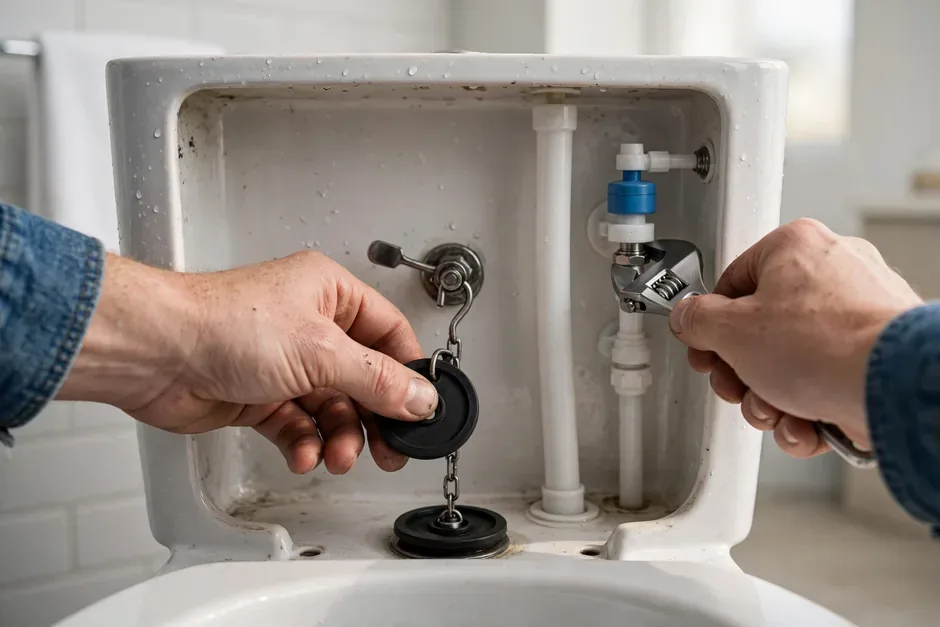
A running toilet is almost always a worn flapper, a fill valve set too high, or a failing flush valve seal. The rest of this post walks through the diagnosis and the repair steps, and when the job needs a plumber instead of a Saturday afternoon. Escondido hard water is part of the story: the City of Escondido 2025 Water Quality Report gives hardness of 210 to 230 milligrams per litre, averaging 215, for City-served customers, and mineral build-up is what wears flappers and pits valve seats. Rincon del Diablo customers should check their own provider's report.
Why your toilet runs constantly
The tank is a simple system: water in, water held, water released. When any stage leaks, the fill valve keeps topping the tank off and you hear the noise. There are four failure points, and they account for nearly every running toilet: the flapper, the rubber seal at the bottom of the tank; the fill valve, the assembly that refills the tank; the flush valve seat, the ring the flapper presses against; and the overflow tube, which drains water straight into the bowl if the level sits above it.
The dye test that separates the repairs
Before you buy anything, do a short diagnosis. Shut off the angle stop behind the toilet, flush and let the tank drain, add a few drops of food colouring to the tank water, and wait without flushing. Colour in the bowl means the flapper or flush valve seat is leaking. No colour, but a fill valve that still runs, means the problem is the fill valve itself. That single test separates most running toilets into one of two repairs. If the water level is also above the overflow tube, lower the float first: sometimes that alone stops the noise.
Flapper replacement, step by step
Close the angle stop and flush the tank empty, sponge out the last of the water so you can see the flush valve seat, unclip the old flapper, and wipe the seat with a rag. If you feel grit or a rough edge, that is the real problem: the seat needs attention, not just the flapper. Clip the new flapper on, hook the chain with a little slack, open the angle stop, let the tank fill, and flush several times. Run the dye test again. No colour in the bowl means the repair held. If the chain is too tight, the flapper never seats and the noise returns. Too loose, and the flush is weak. While the tank is open, check the tank-to-bolt washers: crumbling washers are a separate repair, and toilet repair in Escondido covers the cases where the porcelain is sound but the parts are not.
Fill valve adjustment and replacement
A fill valve runs constantly for three reasons: the float is set too high, the refill tube is pushed down the overflow pipe, or the diaphragm inside has failed. Check them in that order. The water line should sit below the top of the overflow tube. The refill tube must sit above the overflow tube, not inside it, or water siphons into the bowl continuously. If the level is right and the tube is correct, the diaphragm is done and the valve needs replacing. If you are not sure whether the noise is the toilet or a supply line behind the wall, leak detection and repair in Escondido can tell you in a single visit whether the toilet is the source or just the symptom.
Common mistakes to avoid
The most common mistake is replacing the flapper without cleaning the flush valve seat: a new flapper on a scaled seat will leak again. Other traps: over-tightening the supply nut, which can crack the plastic shank; buying a universal flapper for a brand that needs its own shape to seal; ignoring the chain; and forcing a seized angle stop, which turns a small repair into a pipe repair. If you have replaced both the flapper and the fill valve and the toilet still runs, stop buying parts: something else is going on, such as a cracked flush valve or a supply issue upstream. For a full fixture question, toilet installation in Escondido covers replacement, and the Old Escondido page covers period-appropriate fixtures for historic homes.
When to call a professional
Call a professional when the tank has to come off, when the angle stop will not close, or when both the flapper and the fill valve have been replaced and the toilet still runs. Tank-off repairs mean a new tank-to-bowl gasket and a careful torque sequence, and getting it wrong leaves a slow leak onto the floor. If you are not comfortable shutting off the water at the wall, that is your signal.
Frequently Asked Questions
How do I fix a running toilet in Escondido?
Shut off the angle stop, drain the tank, and run a dye test. If dye reaches the bowl, the flapper or flush valve seat is leaking. If the fill valve keeps running with no dye, adjust the float or replace the fill valve.
Why is my toilet running constantly in Escondido?
Escondido hard water wears flappers and pits flush valve seats, so the flapper cannot seal and the fill valve keeps topping off the tank. The City's 2025 report figure of 210 to 230 milligrams per litre, averaging 215, applies to City-served customers only.
Can I fix a running toilet myself in Escondido?
Yes, if the problem is the flapper or the fill valve float. Both are short jobs with basic tools. Call a plumber if the tank needs to come off, the angle stop is seized, or the toilet still runs after both parts are replaced.
How much water does a running toilet waste?
A running toilet can waste a large amount of water, and the amount shows up on the bill. The part that stops it is small, which is why a running toilet is worth fixing promptly rather than living with the noise.
What if the toilet still runs after a flapper and fill valve replacement?
Stop buying parts. A cracked flush valve, a warped tank, or a supply issue upstream is likely, and those need diagnosis rather than another part swap.